A Workhorse of its Time
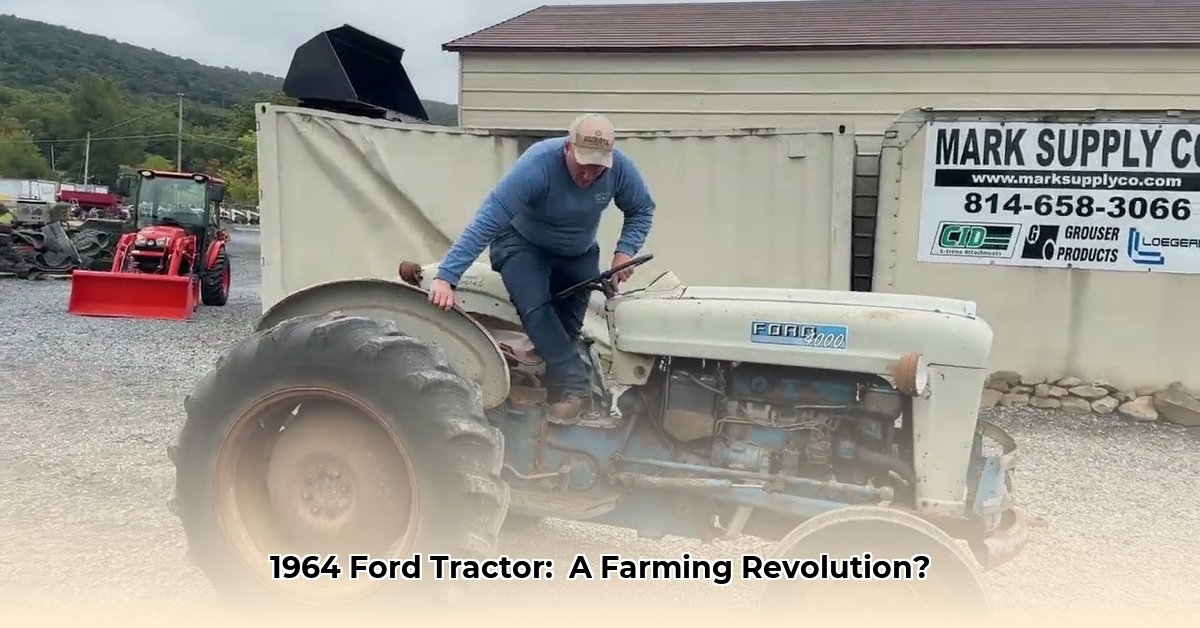
The rumble of a Ford tractor is deeply ingrained in the soundscape of American farming. The 1964 Ford 4000, a stalwart of its era, deserves particular attention, especially when considering its surprising relevance to modern sustainable agriculture. This article delves into the 4000's efficiency, compares it to contemporary tractors, and explores its enduring legacy in shaping farming practices. We'll examine its role in sustainable farming and weigh the pros and cons of maintaining older equipment versus investing in newer technologies. This analysis aims to provide a comprehensive understanding of this iconic machine and its enduring contribution to the agricultural landscape. For more on Ford tractors, visit this useful resource.
Key Insights:
- The 1964 Ford 4000, while less fuel-efficient than modern tractors, represented a significant technological leap for its time, enabling increased productivity.
- Comparing the Ford 4000's fuel efficiency to modern tractors requires a standardized approach, considering factors like horsepower, tasks performed, and operating conditions.
- While the 4000 lacked the precision and technological advancements of modern sustainable farming equipment, its robust design and versatility continue to resonate with farmers prioritizing durability and adaptability.
The 1964 Ford 4000: Design and Capabilities
The mid-1960s marked a period of rapid agricultural transformation. Larger farms were emerging, the demand for higher crop yields intensified, and mechanization reshaped farming practices. The 1964 Ford 4000, with its powerful engine and versatile design, perfectly matched this evolving landscape. Its reliability and adaptability made it a staple on farms across the country.
Under the Hood
Several key features distinguished the Ford 4000. Its engine provided substantial horsepower (specific figures varied by model), offering the necessary power for demanding tasks. Fuel options included gasoline, diesel, and potentially LPG, providing flexibility based on cost and availability. The transmission options further broadened its adaptability to diverse terrains and farming needs. While less sophisticated than modern tractors, its design was remarkably efficient for its time, showcasing clever engineering principles.
How did the Ford 4000's multiple fuel options influence its environmental impact compared to today's standards? This requires careful consideration of both fuel type and overall fuel consumption rates.
Comparing the 1964 Ford 4000 to Modern Sustainable Farming
How does the 1964 Ford 4000 measure up against contemporary sustainable agriculture? This comparison isn't straightforward. Its robust construction and power were undeniable assets, yet its fuel efficiency and emission levels likely fall short of modern standards. This is similar to comparing a classic muscle car to a modern hybrid: one emphasizes raw power, the other prioritizes efficiency and environmental consciousness.
Precision agriculture, a core element of modern sustainable farming, was still in its infancy in 1964. Modern tractors often feature GPS guidance, optimized fuel delivery, and other sophisticated features to minimize resource waste and environmental effects. Thus, while the Ford 4000 represented a significant advancement for its time, it lacked the technological sophistication necessary to fully embrace the ideals of today's sustainable farming methods.
“The 1964 Ford 4000 reflects the agricultural technology of its era. While robust and dependable, it serves as a stark contrast to today's precision-farming technology aimed at minimizing environmental impact,” explains Dr. Anya Sharma, Agricultural Engineer at Cornell University.
Fuel Efficiency: Then and Now
A detailed comparison of fuel efficiency between the Ford 4000 and modern tractors highlights the evolution of agricultural technology and its impact on the environment. While precise fuel consumption figures for the Ford 4000 are difficult to obtain, modern tractors boast dramatically improved fuel efficiency thanks to advancements in engine design, efficient transmissions (such as CVTs), and precision farming methods. GPS guidance, for example, reduces overlapping passes and fuel consumption.
Can we definitively say that modern tractors' reduced fuel consumption outweighs the overall environmental impact of their manufacturing and eventual disposal? Further research is needed to answer this multifaceted question.
A Lasting Legacy
The 1964 Ford 4000 is more than just a machine; it represents a pivotal moment in agricultural history. Its legacy is deeply intertwined with the evolution of farming technology and the ongoing quest for truly sustainable practices. While a significant advancement for its time, it underscores the continuous journey toward more environmentally conscious farming methods. It's a testament to human ingenuity, constantly adapting to improve and enhance agricultural practices.